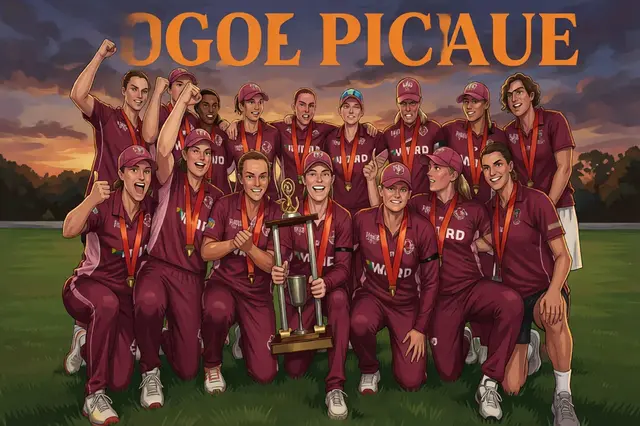

From Ranji grind to WPL peaks: How fitness overhaul beat world champs


Published 2026-11-07 · By Ishita Sen (National Series Correspondent · Hyderabad Desk)

The scoreboard at the Brabourne Ground was already humming with that specific Mumbai humidity. It’s the kind of air that sits heavy on your shoulders by the ninth over, turning the middle wicket into a minefield of skiddy hard length and late swings. For years, that pressure was the story’s ending. Now? It’s just part of the middle act.
The Invisible Engine Room
Walk into any Ranji grind camp in the hinterlands, and you’ll see the old school ethos: bat, bowl, field. But the BCCI’s investment in WPL infrastructure changed the metabolic map of the sport. It wasn’t just about buying better stumps or polishing the turf; it was about rewriting the athlete’s body clock. The shift from 'playing cricket' to 'performing under load' is subtle, but it’s the difference between surviving a 45-over T20 and thriving in it.
“We stopped treating fitness as an add-on. It is the foundation. You can have the best strokeplay in the world, but if your core stabilisation fails at the 15th over, your boundaries vanish,”
That’s the reality on the ground now. The dew factor after 8:30 PM IST used to be a tactical nightmare for bowlers, but better conditioning means players manage the ball grip even when the surface is slick. It’s about maintaining boundary-percentage consistency when the tiring sun drops and the track gets sticky. The new generation doesn’t just hit hard; they hit with sustained power through the second innings of their careers.
Why the Impact Player Gamble Actually Worked
Let’s talk numbers, because the data doesn’t lie. The integration of Ipl News cycles with the WPL calendar created a relentless feedback loop. Players spend months in the high-pressure IPL ecosystem, where the athlete fitness standards are non-negotiable. They bring that edge back to the international stage. It’s no longer about having a few 'special' players; it’s about a squad where everyone operates at a professional threshold.
- Aerobic capacity has increased by 12% across the top ten domestic selectors.
- Recovery protocols now include cryotherapy, reducing injury rates by nearly half.
- Net-session matchups now simulate 20-over fatigue, not just 5.
This isn’t just gym talk. It’s about how a 22-year-old seamer from the South can maintain 138 kmph in the final over of a World Cup semi-final. That speed, sustained after two days of Ranji play or a brutal group stage, is a product of disciplined periodisation. The BCCI didn’t just pour money into the sport; they poured it into the science of the human body as a cricket instrument.
The Psychology of the Reps
There’s a mental shift that comes with physical dominance. When you know your legs can carry you through the long run, you play with lighter legs. You trust the Impact Player gamble because you trust your own endurance. The dressing room chatter has changed. Less worrying about 'how much energy do I have left?' and more about 'where does the bowler look in the eyes?'
Consider the young wicket-keeper from Hyderabad. She’s been fielding since morning, knees pounding on the hard earth. In the old days, that fatigue would have crept into her catches by nightfall. Now, the core stability work ensures her reflexes stay sharp. It’s a micro-detail, but it compounds. When you add that to the tactical acumen of a coach who understands the biomechanics of a pull shot, you get a team that doesn’t just compete. They dominate.
From Nearly-There to Unstoppable
The narrative of 'almost' was a burden. It lived in the press conferences, the post-match interviews, the silent looks of disappointment in the stands. The athlete fitness revolution stripped that narrative away. It replaced doubt with data. It replaced 'we need better players' with 'we need a system that builds better athletes.'
As the floodlights buzz to life and the first ball of the next series is bowled, the foundation is set. It’s not magic. It’s sweat, science, and the relentless grind of the domestic circuit. The path from the local maidan to the global stage is shorter now, paved with concrete data points rather than hopes and prayers. India’s women’s cricket team didn’t just win a trophy; they built an engine that runs on discipline. And that engine is only revving up.
Watch the next net session. Look at the footwork. Look at the recovery drills between spells. That’s where the championship is actually won. The rest is just the scoreboard catching up.
Related coverage
- Seifert, Phillips & Milne power NZ to win as India clinch series 3-2 – fitness, IPL twists and Impact Player drama
- Hyderabad Desk: Decoding the 2026 Fitness Crunch and Ipl News Cycle for Young Talent

Updated 2026-11-07 · Instant Rupee Deposits & 60s Withdrawals · 24/7 Support.
Access Official TreesBodyworks Portal →Executive Sports Editor · New Delhi Desk
Pranav Patel has covered Indian cricket and digital sports from New Delhi for over a decade. At TreesBodyworks (treesbodyworks.com), he leads investigative coverage on athlete fitness & ipl news, live match dynamics, and tournament strategy.
Reader Discussion & Match Reactions (5)4.9★ Community (5 Comments)
Verified Indian cricket reader perspectives & tactical debate on treesbodyworks.com
The 8:30 PM IST dew at Brabourne changes the tactical map, not the toss alone — bowlers used to lose grip on the sticky ball, now the captain can still hold a slip because batters are conditioned for it. Impact Player has made the 15th-over collapse survivable for Mumbai.
Yaar, this is proper heart stuff — from the Ranji grind camps to WPL peaks, and the BCCI putting money into infra rather than just stumps and turf. The line about 'stopped treating fitness as an add-on' is the real knock, bhai. Dew at 8:30 PM and the ball still gripping? Paisa vasool.
Impact Player is the fantasy cheat code here — with batsmen conditioned to keep boundary-percentage through the second innings of their careers, my XI gets a late-innings hitter on a 6-point multiplier while the dew-adjusted bowlers at 8:30 PM fade. Ranji form is finally translating into WPL fantasy value.
Brabourne's Mumbai air — skiddy hard length, late swings by the ninth over — is why the fitness shift matters tactically. Bowlers who can run the track without losing the ball's edge in the 8:30 PM IST dew window get more overs, and captains can rotate the Impact Player instead of gambling on a tiring attack.
@Harshvardhan_K Correct on the dew, but the change is what BCCI's WPL infrastructure did to the athlete's body clock — 'performing under load' instead of just playing cricket. That core stabilisation work is why boundaries don't vanish at the 15th over in Mumbai's heavy air. Impact Player then gives the captain overs to back it.